What demolition work do you do in Padiham?
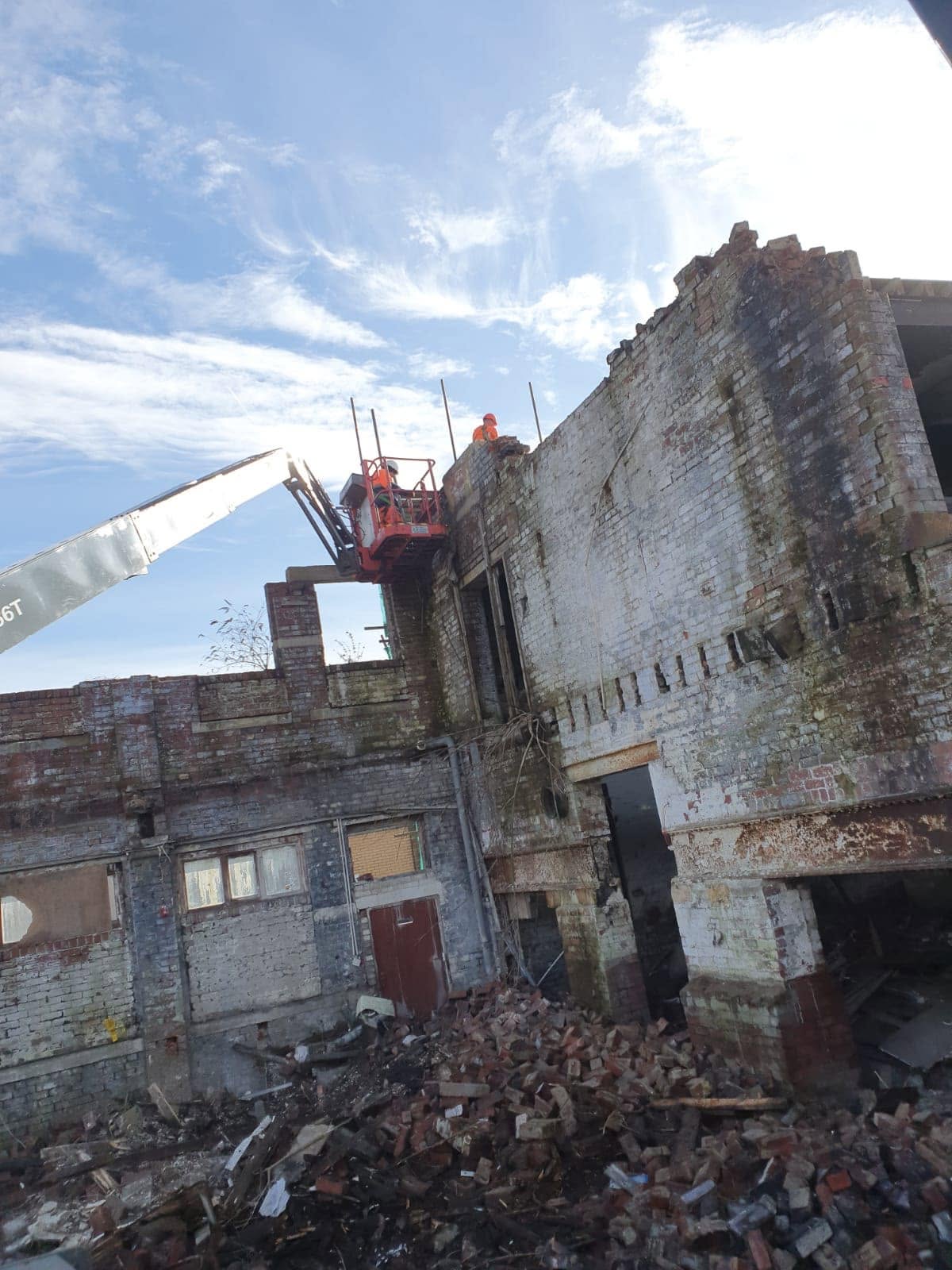
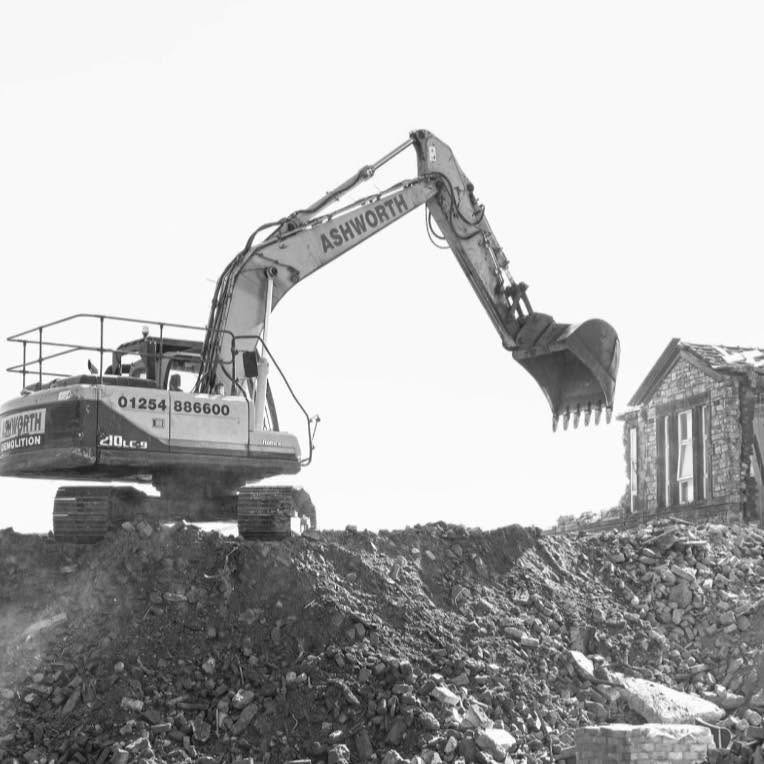
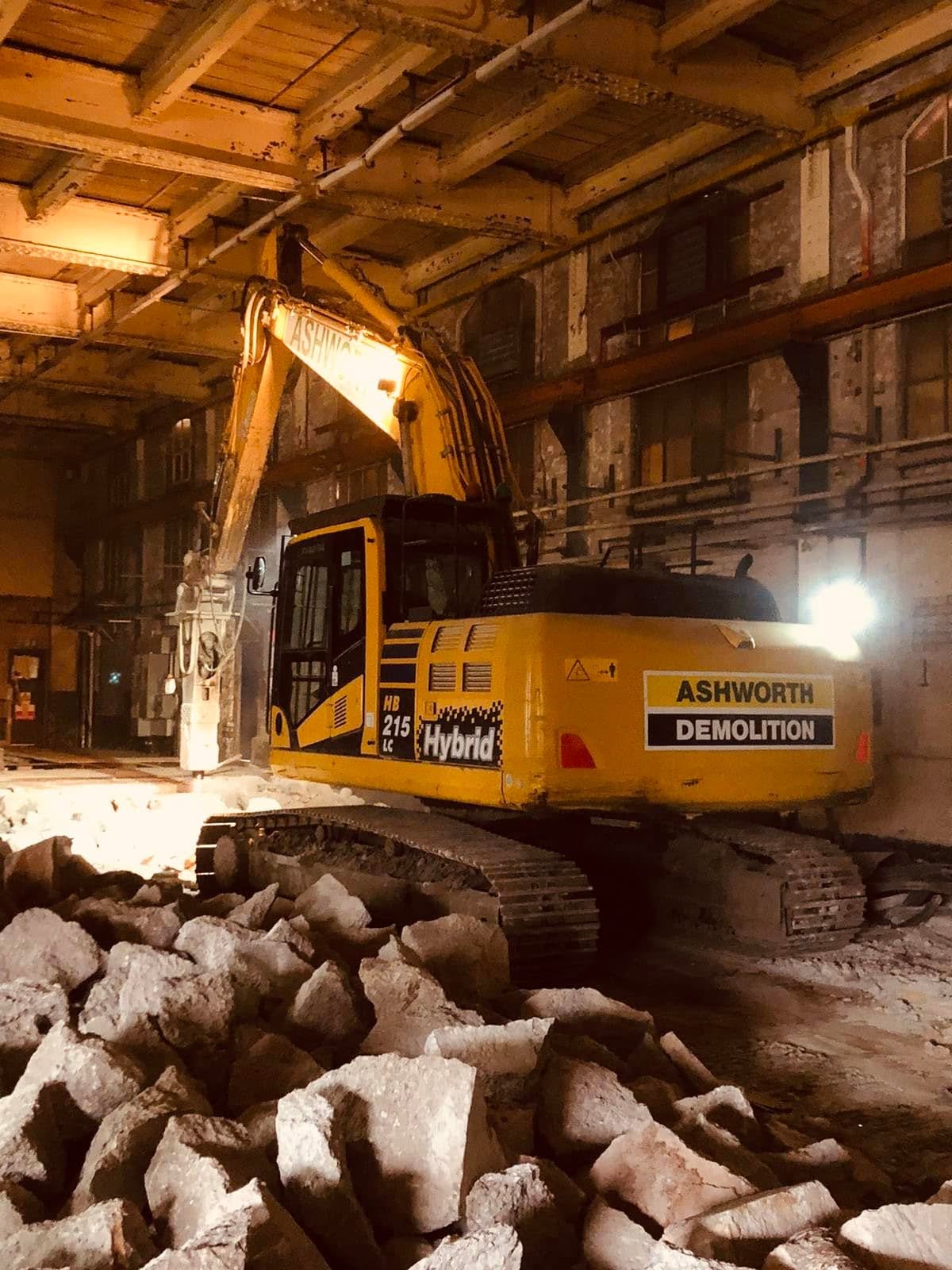
Across Padiham (BB12) it is mostly mill and shed demolition, partial demolition on attached terraces and yard clearance, along with the crushing, recycling and muck away that goes with all of it. Padiham carries a lot of former cotton mill and industrial stock, which means large masonry and steel framed structures, party walls shared with terraces that are still lived in, and material worth reclaiming rather than skipping. Every job starts with somebody coming to look at the building rather than a price guessed from a description.
Do you charge extra to come out to Padiham?
No. Padiham is roughly 12 miles from the yard at Slaidburn, well inside the daily patch, so travel sits in the price rather than on top of it and a survey visit is normally a few days away.
Do you cover Padiham?
Yes. Padiham is compact and a lot of its industrial buildings back straight onto housing, so access and neighbour notice usually shape the method. Give us a ring and we will tell you what we normally find in buildings around Gawthorpe Hall, what is likely to need doing before a machine can start, and roughly where you sit in the diary.
Does the type of building in Padiham change the job?
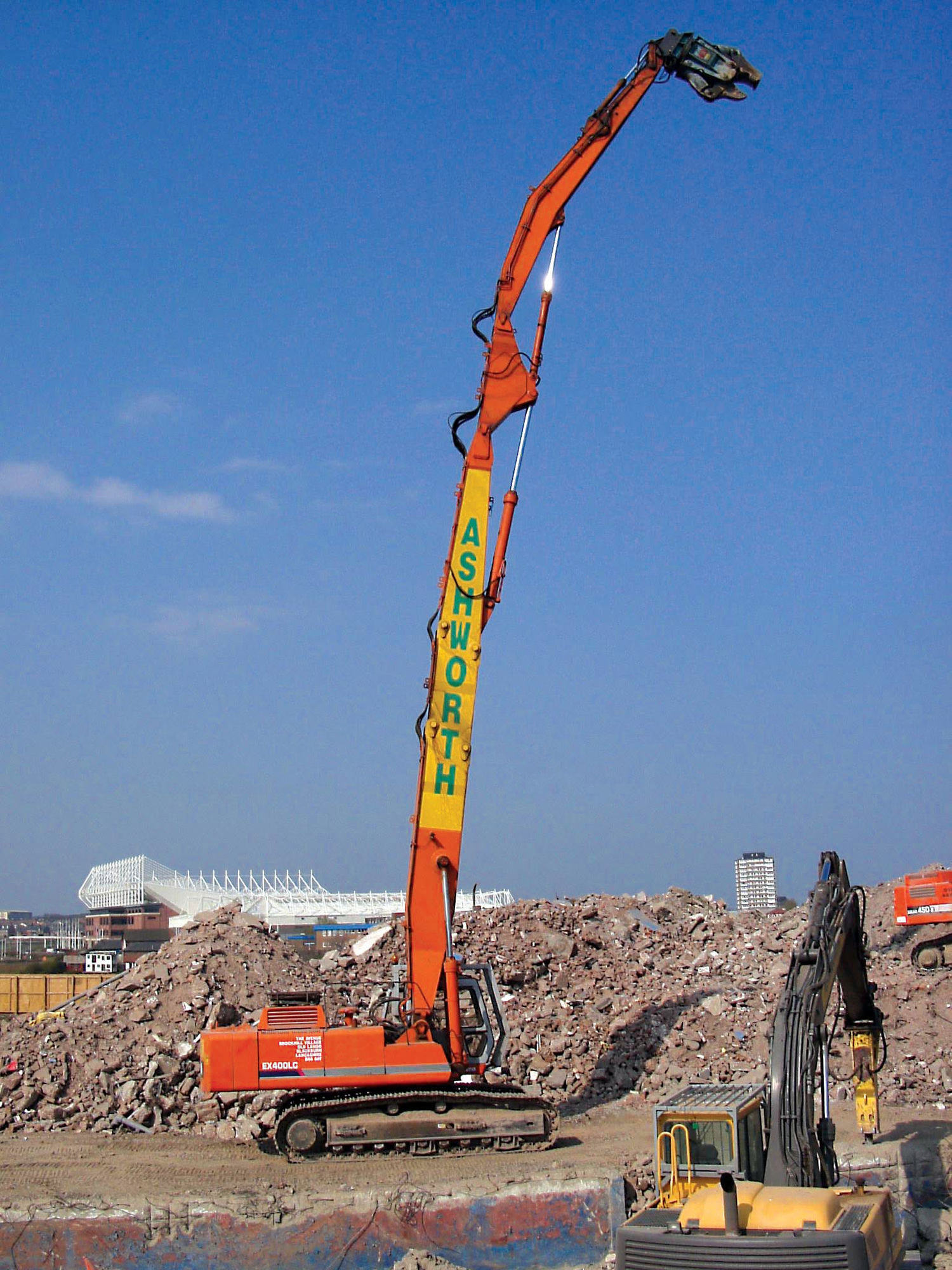
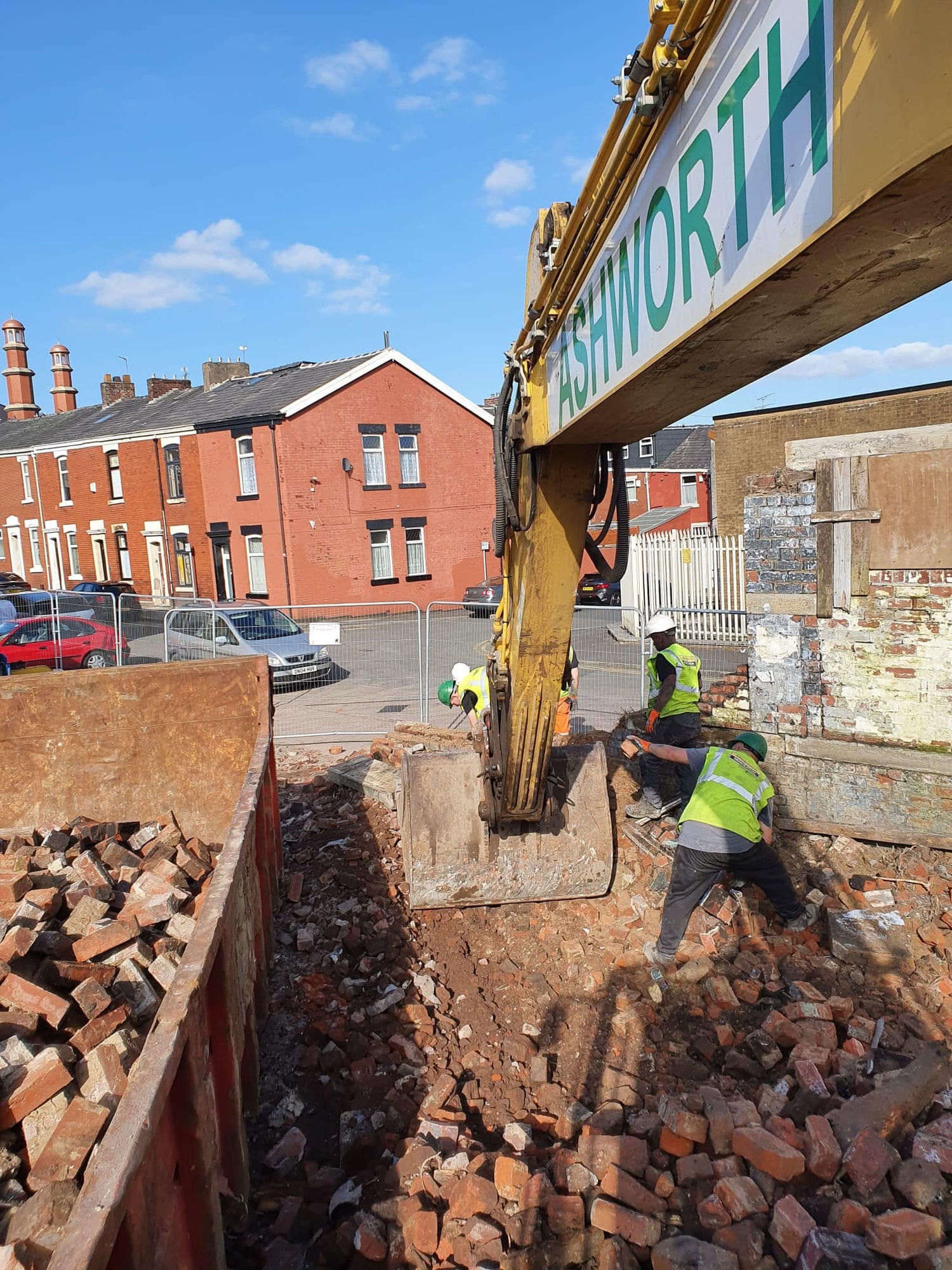
It does, and in Padiham it decides the method more than anything else. The mill and works buildings are heavy masonry or steel frame, often four or five storeys, and they are frequently attached to terraces that are still occupied. That pushes the job toward high reach demolition from the ground rather than a gang working inside a structure being taken apart, and it makes the party wall the most delicate part of the whole thing. The upside is the material: mill stone, handmade brick and structural steel out of a Padiham building are all worth recovering rather than crushing, and that comes off the price.
Can you handle the disconnections and the paperwork in Padiham?
Yes, and it is usually what sets the start date rather than the demolition itself. We identify what is live, raise the gas, electric, water and telecoms disconnections with the network operators and chase them through, serve the Section 80 notice on the council, and work to the asbestos survey. You get the waste transfer notes back at the end. On a Padiham job that admin often runs longer than the machine time, which is why it gets started the day the job is agreed.
How soon could you start in Padiham?
Padiham is around 12 miles from the yard, so getting out to survey and price is quick. The actual start depends on the utility disconnections, any consent the building needs and where the machines are, which is normally a few weeks rather than a few days. We would rather give you a real date than a hopeful one, so ring and we will tell you what the next honest slot looks like.