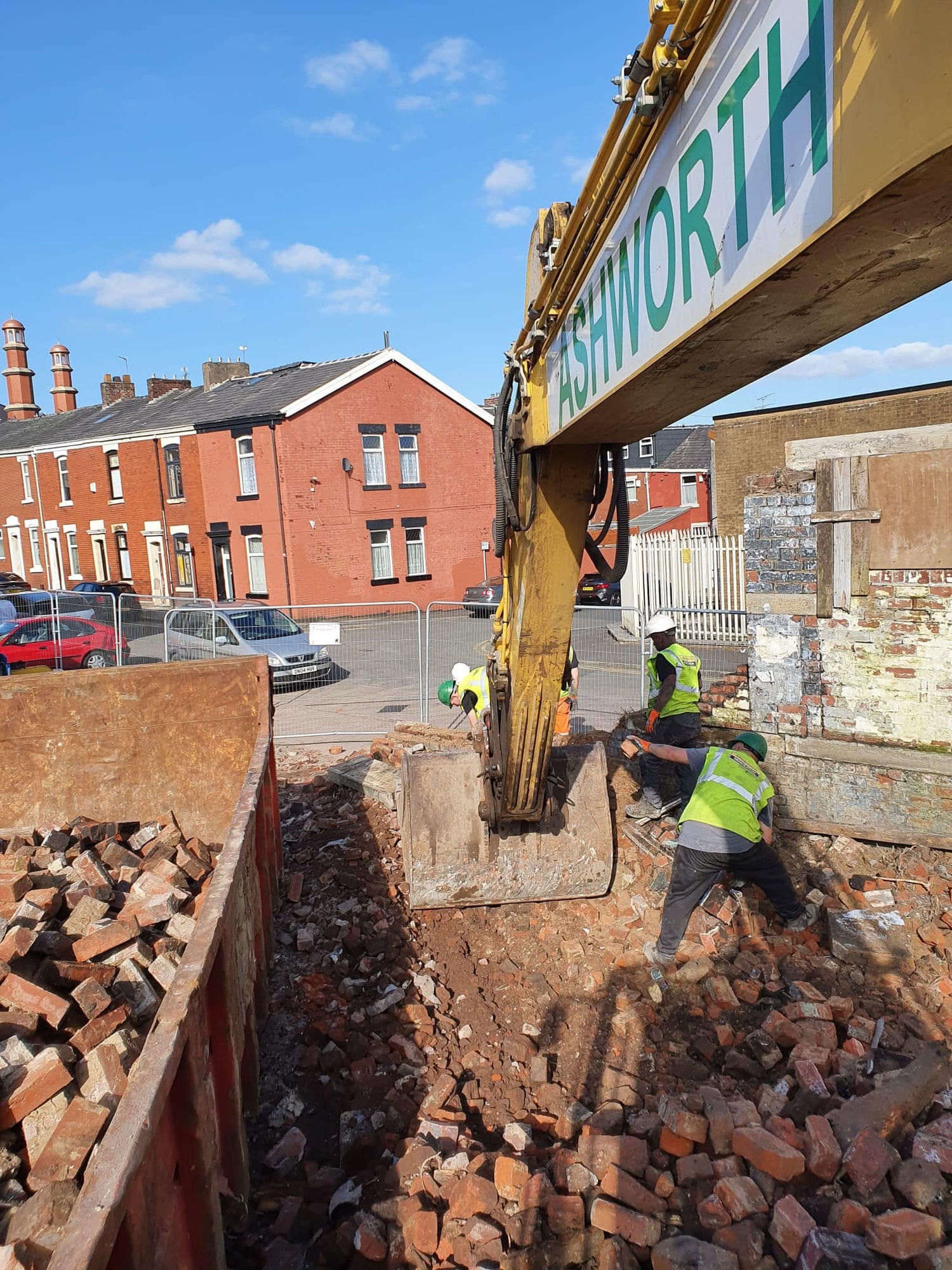
Can you crush the material on my site?
Where there is room to stand a crusher and stockpile the product, yes. It needs space, a sensible standing and the right permit or exemption in place, all of which we sort out. On a tight town centre plot it may not be practical, in which case material goes out to be processed and the honest comparison is done at quote stage.
Is crushed demolition material any good as fill?
Properly processed, yes. Clean concrete, brick and block crushed and graded makes a good general fill and piling mat, and it is used that way on sites all over the country. The quality comes from segregating it beforehand, which is exactly why contaminated material makes such poor fill.
Does recycling on site actually save money?
On most jobs of any size it is the biggest saving on the ticket, because it removes two costs at once: paying to tip the material and paying again to buy stone in. It also cuts the number of wagon movements, which matters on sites where access or neighbours are the constraint.
What happens to the metal?
It is separated as the building comes down and sent for recycling. Structural steel, cast iron, cable and non ferrous all have a value and it gets accounted for in the job rather than disappearing.
Do you reclaim brick and stone?
Where the building has brick, stone, slate or setts worth reclaiming and the programme allows it to be taken down by hand, yes. It is slower than machine demolition and it only makes sense when the material justifies it, so we will tell you honestly whether yours does.