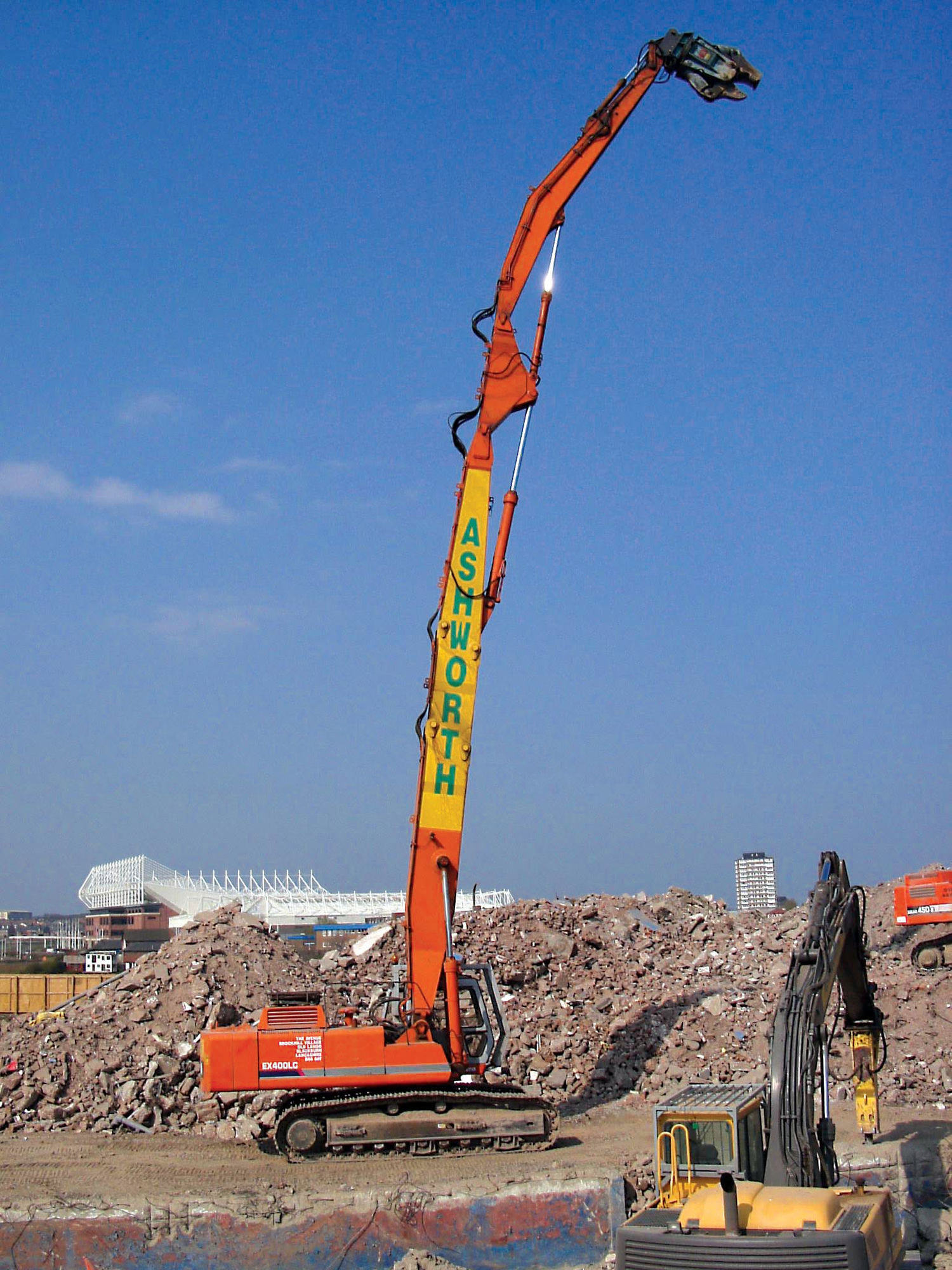
How high can you reach?
The fleet covers the sort of heights the North of England throws up, which is mostly mill and multi storey frame work rather than tower blocks. The honest answer is that it depends on the structure as well as the machine, because a masonry mill and a steel frame at the same height need different reach and a different standing position. Tell us the height and what it is built of and we will tell you straight whether it is a job for us.
Is high reach safer than a top down strip?
For most tall structures, yes, and it is why the work moved this way. Nobody is working at height inside a building that is being taken apart, the operator sits in a protected cab away from the face, and the structure is removed in a controlled sequence rather than by a gang working across it. The trade off is the exclusion zone, which needs real space around the building.
How much room do you need around the building?
As a rule of thumb the machine wants to stand back roughly the height of the structure, and the drop zone wants to be clear for a similar distance. Tight sites are still doable but they need containment, sometimes a phased approach and occasionally a different method altogether. That is a site visit question, not a phone question.
Can you take down a mill chimney?
Chimneys are their own discipline. Depending on the stack, the ground around it and what is close by, it is either taken down from a high reach machine, dismantled from the top by a steeplejack, or in rare open cases felled. We will look at it and tell you which of those it is rather than assume.
Do you work while the neighbouring buildings stay in use?
Often, yes, and it changes the plan rather than stopping it. Working hours get agreed, the exclusion zone gets set from the far side of the boundary, screening goes up and the sequence is arranged so the face being worked is turned away from whoever is closest.