How much does a full demolition cost?
It depends on what the building is made of, how easy it is to get a machine to it, what is next door and how much of the material can be reused on site. A detached house on an open plot and a steel framed unit in a yard are two different jobs. We come and look, then give you a written price that covers the take-down, the clearance and the disposal, so there are no extras invented later.
Do I need planning permission to demolish a building?
Usually you need prior notification to the council rather than full planning permission, and you almost always need a Section 80 notice under the Building Act served before work starts. Listed buildings, buildings in a conservation area and anything with a demolition condition attached are different and need consent. We will tell you which of those applies to your building and we handle the Section 80 as part of the job.
Who disconnects the gas and electric?
The utilities do, and it has to be them. We identify what is live, raise the disconnection requests and chase them, but the actual capping is done by the network operator and comes with a certificate. It is worth starting that early because disconnection lead times, not the demolition itself, are what usually set the start date.
What happens to the rubble?
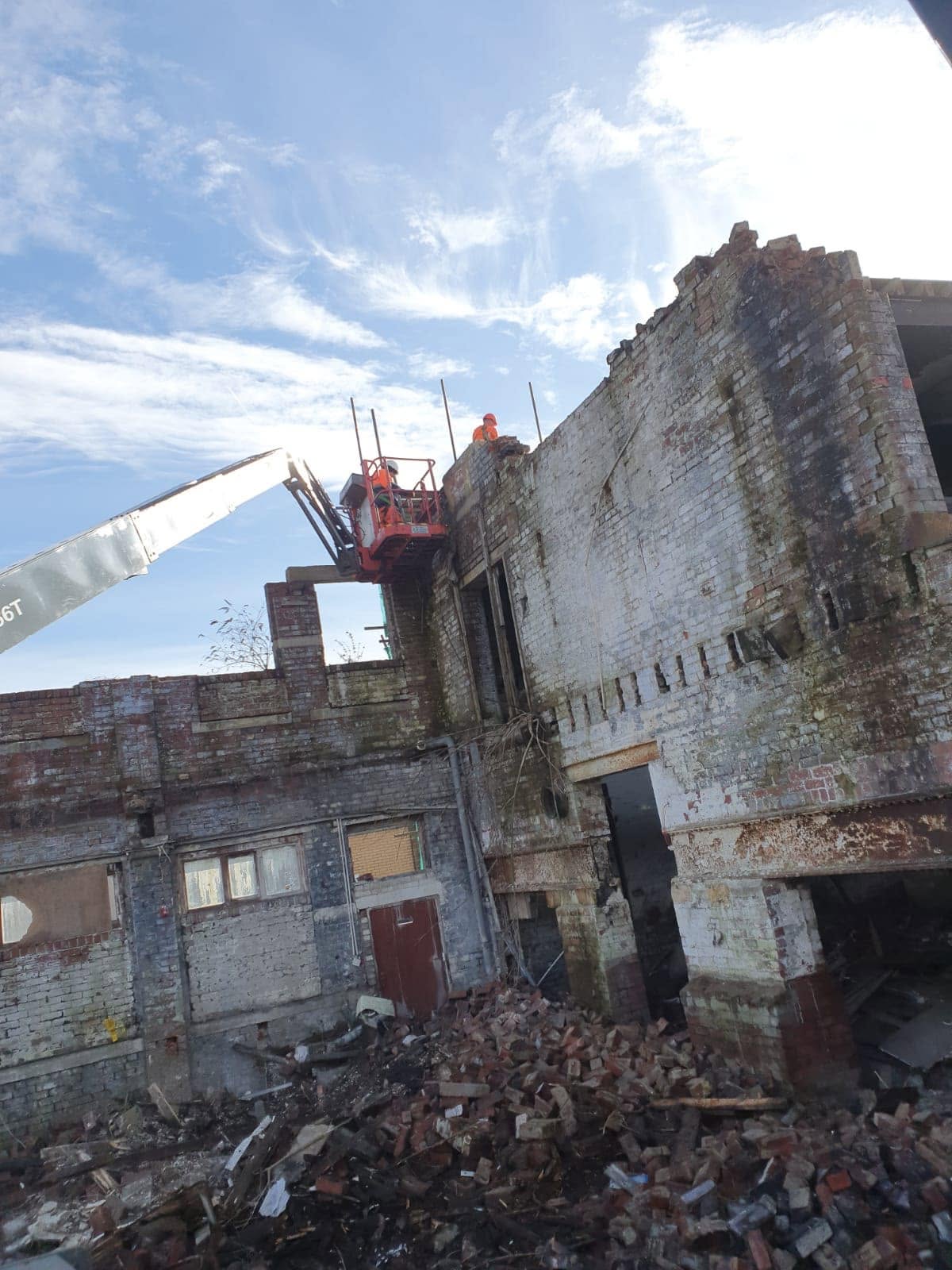
As much as possible stays on site. Concrete, brick and block get crushed into a graded hardcore that can be reused as fill or piling mat, which is cheaper for you than paying to tip it and then paying again for imported stone. Metals go for recycling, timber and mixed waste go out under waste transfer notes.
How long does a full demolition take?
A house is usually a few days to a week including the clearance. A commercial or industrial building is more often two to six weeks depending on size, asbestos removal and how much of the material is being processed on site. The survey is what turns that range into a date, which is why we do it before quoting.